

BIG GULP
FEATURE | 112 MIN | BLACK COMEDY / SOCIAL SATIRE / FAMILY ENSEMBLE
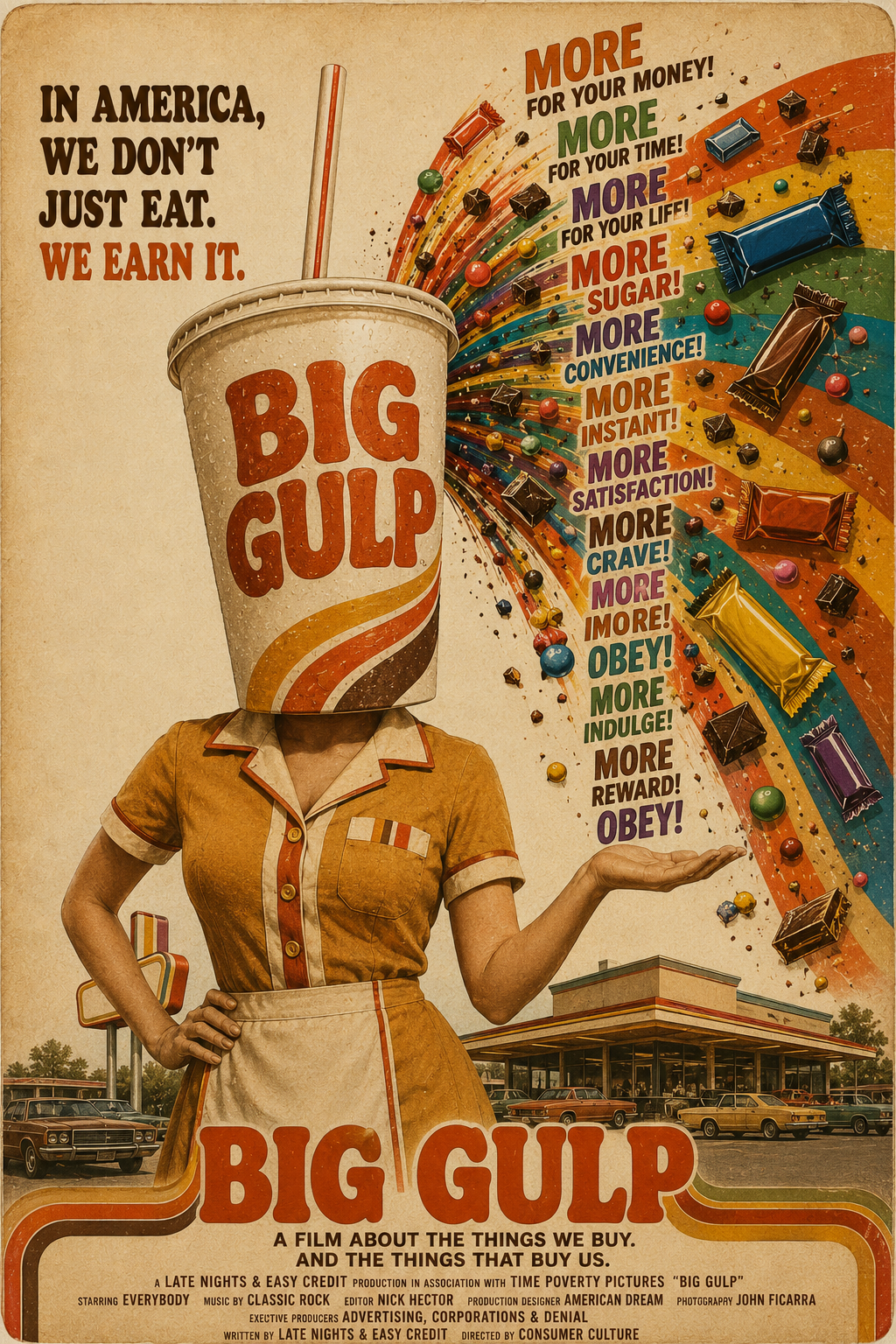
More food. More choices. More convenience. More excuses.
LOGLINE
In 1970s Pittsburgh, three suburban families embrace America's intoxicating new promise that everything can be bigger, faster, easier and more convenient. As processed food, advertising, two-income pressure, inflation and consumer aspiration invade their kitchens, marriages and children's lives, abundance begins producing a strange new hunger. Ad man Bill Rinaldi knows exactly how to sell it: YOU'VE EARNED ANOTHER. By the time he arrives at the ultimate expression of the decade—BIG GULP—nobody can tell whether Americans are buying the products or the products have bought them.
THE STORY
Pittsburgh, 1971. Three Mt. Lebanon families enter a decade promising liberation through convenience: better appliances, easier meals, bigger portions, more choices and advertising that transforms every craving into something people deserve. Kitchens fill, televisions sell, parents work longer, children roam farther and dinner gradually changes from a family ritual into something eaten between obligations. Bill Rinaldi understands the mechanism before anyone else—don't sell people food; sell them permission.
By the middle of the decade, convenience has created its own complications: inflation, debt, diet anxiety, health scares, exhausted marriages, wounded masculinity and families increasingly surrounded by things while starved for time. Bill's slogans evolve with the culture—YOU'VE EARNED ANOTHER becomes YOU'VE EARNED A BETTER YOU, until even self-improvement becomes another product to consume. Commercials begin bleeding into reality as food language becomes the language of money, status, guilt, love and failure. Everybody wants less of themselves and more of everything else.
By 1976, America has learned to package dissatisfaction almost perfectly. Bill reaches the inevitable slogan—WHY SETTLE FOR ENOUGH?—and the enormous drink called BIG GULP becomes less an invention than the logical conclusion of everything the families have been living. There is no sermon and no villain unveiling the scheme; only people discovering that convenience saved them time they somehow no longer possess. The decade ends with a simple question hanging over increasingly crowded American lives: where are we going to put all this stuff?
SATISFACTION GUARANTEED. HAPPINESS SOLD SEPARATELY.
Marketing doesn't create desire. It gives desire a logo.